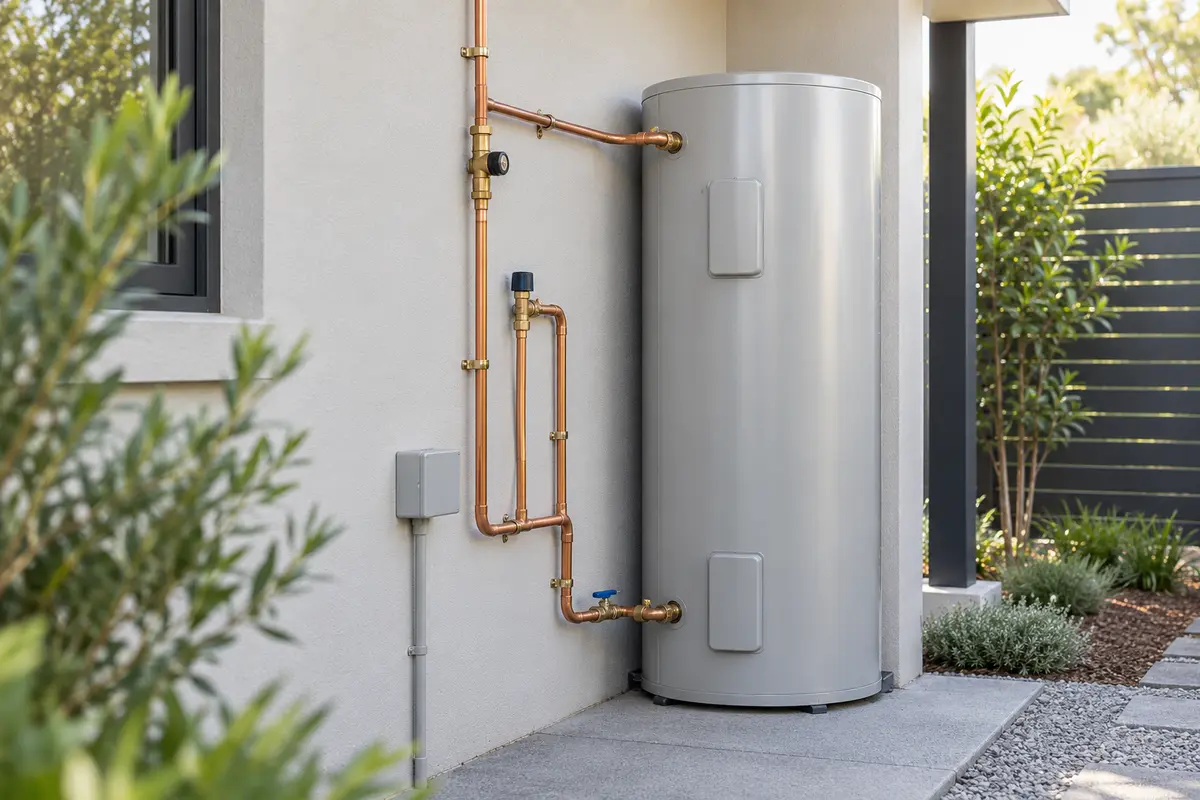
Common warning signs
One symptom can have several possible causes. Note what you can see, hear or smell without dismantling equipment.
- Water is cold, lukewarm or runs out unusually quickly
- The unit leaks, rumbles or releases rusty water
- Pressure or temperature changes suddenly
- Energy use rises without an obvious reason
What to do before arranging help
- 1
Check whether other gas or electrical appliances are affected.
- 2
Do not remove covers or attempt gas, electrical or pressure-valve repairs yourself.
- 3
Record the unit make, model, capacity and approximate age before seeking advice.
Questions to ask a Sydney plumber
- Can the existing system be repaired safely?
- What size suits the household and usage pattern?
- What are the supply, installation and disposal costs?
- Which product and workmanship warranties apply?
Understanding the price
Plumbing costs can vary with travel, timing, access, fault-finding, materials and the extent of the repair. Ask whether the price is a fixed quote or an estimate, whether GST and call-out fees are included, and what circumstances could add to the final amount.
The cheapest initial figure is not always the lowest total cost. Compare the proposed method, inclusions, exclusions, licences, documentation and warranty as well as price.
Frequently asked questions
How long does a hot water system last?
Service life varies by system type, water quality, maintenance and installation. Age alone does not determine whether repair or replacement is best.
Which type is best for Sydney homes?
Electric, gas, heat-pump, solar and continuous-flow systems each have different space, energy and usage requirements. A suitable choice depends on the property.
Who can install a hot water system?
The required licences depend on the electrical, gas and plumbing work involved. Confirm the installer holds the appropriate NSW licences.